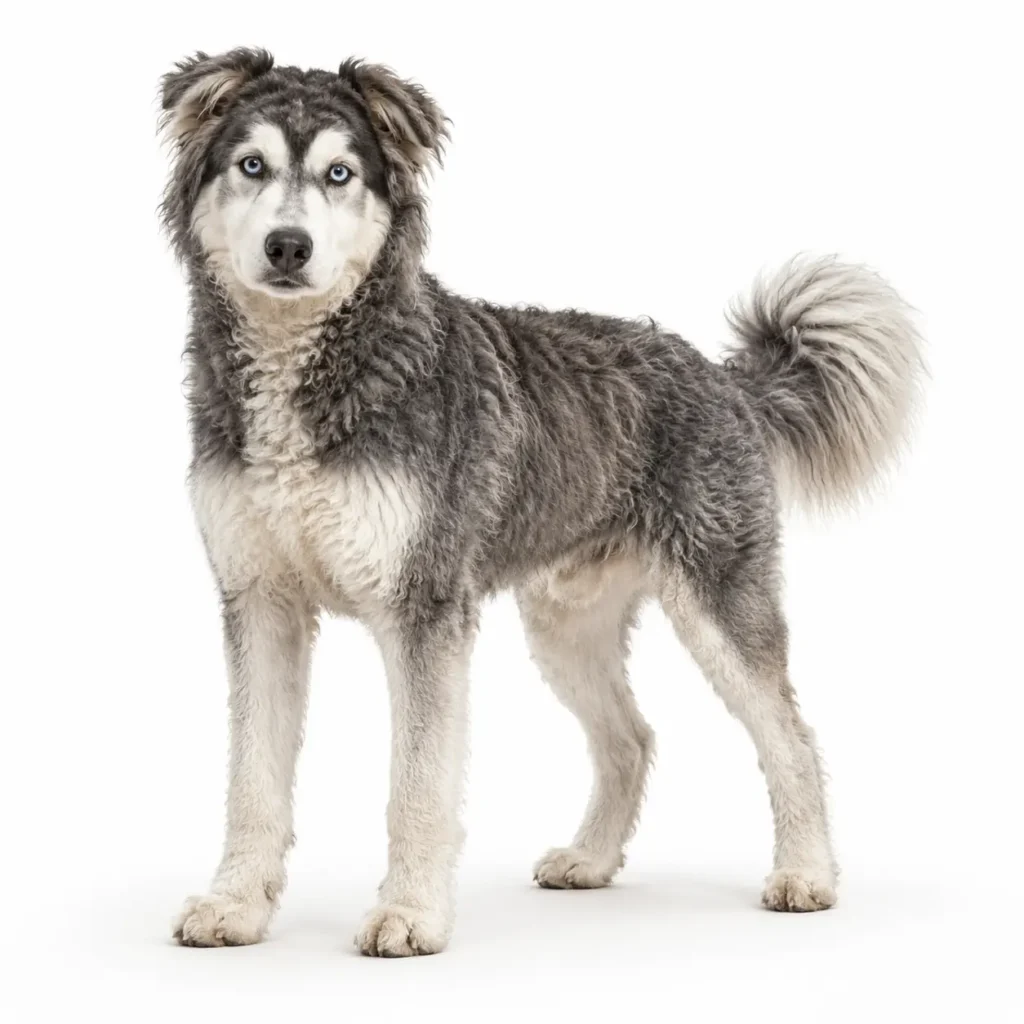
The Huskydoodle combines two athletic, intelligent breeds. Owners should be prepared for substantial daily activity, structured training, mental challenges, and individual variation.
About This Doodle
The Huskydoodle is the commonly used name for a Siberian Husky x Poodle cross. Doodles do not follow one universal breed standard, so Poodle size, generation, genetics, upbringing, and training can shape how each dog develops.
Size And Lifespan
Adult size can vary considerably. The Siberian Husky reference is 35-60 lb; Poodles can range from about 4-6 lb Toy Poodles to 40-70 lb Standard Poodles. The adult size of the parent dogs is more useful than the Doodle name alone.
There is no single lifespan range shared by every dog with this Doodle name. Parent references are 12-14 yr for Siberian Husky and 10-18 years across Poodle varieties. Individual health and body size matter.
Coat And Grooming
Coat possibilities may include the Siberian Husky's dense double coat and the Poodle's dense curly coat. An individual may be straight, wavy, or curly and may retain undercoat. A furnished or curly coat can still shed.
Shedding can vary. Siberian Husky ancestry may contribute high seasonal shedding, while Poodles are generally low-shedding. Littermates can differ, and no coat type can guarantee a shed-free or allergen-free dog.
Plan on thorough brushing and combing several times per week, often daily for a long or dense coat, plus professional grooming about every 4-8 weeks depending on coat and clip. Check ears, nails, teeth, eyes, skin, feet, and friction areas routinely. Double-coated ancestry can create dense undercoat beneath furnishings, so combing to the skin matters.
Personality And Activity
Traits sometimes associated with Siberian Husky ancestry include friendly, independent, athletic, escape-prone. Poodles are active, responsive, versatile sporting dogs. Individual personality still depends on genetics, upbringing, health, and experience.
Activity outlook: Very high. Often substantial. Plan for structured physical exercise, training, problem-solving, and recovery time every day. A yard alone is not a program.
Training And Daily Life
Often capable of learning quickly, but intelligence is not automatic compliance. Reinforcement history, motivation, sensitivity, independence, and inherited working instincts all affect training.
Health Considerations
Health concerns may come from either parent breed. On the Siberian Husky side, topics to discuss with a veterinarian include Hip dysplasia, eye disease including juvenile cataracts, zinc-responsive dermatosis. Poodle-related considerations vary by size and can include orthopedic, eye, patellar, thyroid, sebaceous adenitis, cardiac, and PRA concerns. A mixed-breed dog can still inherit health concerns from either side.